- May 16, 2026
When Dean Blackwood Says The Failures Were Deliberate, He Has The Documents To Prove It

Disclaimer: Dean spoke in a personal capacity, not on behalf of any agency or organisation. Conversation, not legal, planning, or policy advice.
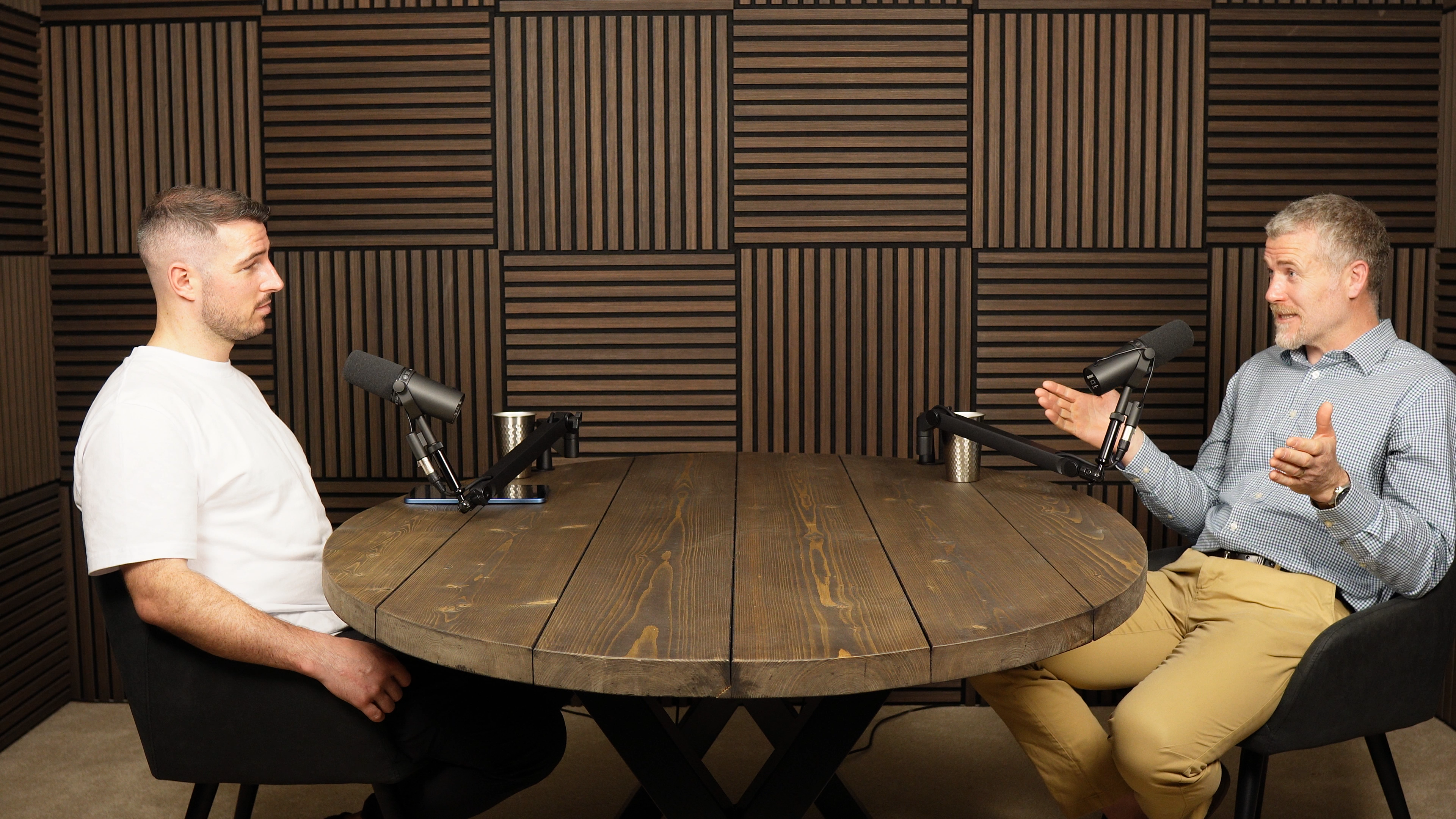
Dean Blackwood is on The Infinite Creators Podcast this week and I’m still sitting with the conversation a few days later. Of all the episodes I’ve recorded so far, this is the most uncomfortable one to publish, and I think it’s the most necessary.
Dean is from Derry, based in Belfast. He spent his entire working life as a civil servant inside Northern Ireland’s planning department, and retired in 2013. Within a year of retiring he was filing official complaints against his old colleagues. A decade on, he’s taken cases to the Northern Ireland Ombudsman, to the European Commission, to the United Nations, and to the Northern Ireland Assembly’s Public Accounts Committee. He has the rulings to show for it. Most of the documents that proved he was right came out of the system that wanted them buried.
I brought Dean on because I wanted to understand what actually happens to a country’s land and water when nobody at the top wants to look. What I got was a much harder, more documented conversation than I was expecting.
“An Olympic-sized swimming pool of leachate. Every week.”
Official 2014 government estimate referenced by Dean Blackwood
That isn’t Dean. That’s the official 2014 government estimate of what an illegal dump on the edge of the River Faughan, just outside Derry, was producing. I’m starting there because that’s where Dean started me, and because once you have that figure in your head you can’t un-have it.
Where he started
Before any of the rulings, before the master’s, before the cases against the UK government, Dean was a four-year-old sitting beside his Great Uncle Albert on the bank of the River Foyle. His father and uncles were upstream chasing trout. Albert’s job was to mind Dean. Flask of tea, lemon curd sandwiches, and a sally rod cut from a willow with a hook and a worm tied on the end.
Dean told me he gets sent jars of lemon curd every time he tells that story. He also told me, more quietly, that those mornings are the reason he’s done everything since. They shaped his attachment to the river, he said, and his commitment to giving it a voice.
I keep that in mind when I read the rulings. Underneath all of it, Dean is still the four-year-old with the willow rod.
Mobuoy
If you take one fact from this episode, take this one. There’s a site on the edge of the River Faughan, just outside Derry, called Mobuoy. It’s about the size of sixty-four football pitches. It contains roughly 1.6 million tonnes of waste. It’s one of the largest illegal landfills in Europe. Dean has been trying to get a serious response to it for more than a decade.
The way he described it to me, Mobuoy sat there in plain sight, run by two businesses that looked like a quarry and a recycling plant. They weren’t, not really. The quarry was extracting gravel without the proper permissions or environmental assessments. The recycling plant was shredding waste from multiple councils and burying it in the holes the quarry was leaving behind.
What was actually being made underground, in Dean’s words, was a toxic soup. The official term is leachate. Rainwater filters down through the buried waste, picks up a cocktail of chemicals on the way through, and runs out the other side into the surrounding ground and water.
The river it sits beside supplies sixty per cent of Derry’s drinking water.
I had to make him repeat the next number for me. A 2014 government report estimated that Mobuoy was producing an Olympic-sized swimming pool of toxic leachate every week. The minister at the time called the site a ticking time bomb. The director of the Loughs Agency said his worst nightmare was the morning he got the phone call telling him the river was dead.
Dean and the River Faughan Anglers reported concerns about the site formally in 2008. They reported them again in 2009. Both letters disappeared from official records. Years later, when an Ombudsman investigation was opened, a key internal government document that proved Dean had been right reappeared anonymously in an envelope on his office desk, leaked by someone in government who had finally had enough. He’d been told for years it didn’t exist.
Two of the people running the site have since been prosecuted and jailed. The court accepted that the landfill tax one of them had avoided ran to roughly £30 million. That’s the rough scale of the financial incentive that kept the operation going for over a decade, while two formal complaints went missing inside the system that was supposed to stop it.
That’s the moment from his story I keep coming back to. Not the Olympic pool. The envelope. After that, he stopped reading the absence of records as incompetence. He started reading it as deliberate.
Lough Neagh
The conversation widens. Dean walked me through Lough Neagh, the largest freshwater lake in Ireland and the source of drinking water for a significant slice of Northern Ireland. It’s been in the news for the wrong reasons for years now. The blue-green algae problem has been confirmed earlier in the year than ever before. He talks about it the way you’d talk about a fire that everyone has agreed not to look at.
He’s clear about the causes. The biggest single contributor is agricultural runoff from a decade of intensified industrial farming under a Northern Ireland Department of Agriculture programme called Going for Growth. More chickens, more pigs, more nutrients in the watercourses than the lakes and rivers can process.
A community group running their own science on a proposed pig factory near Limavady estimated that the manure produced by Northern Ireland’s pig industry alone was roughly the sewage equivalent of eight million people. Northern Ireland’s actual population is under two million.
The second biggest contributor is sewage infrastructure that has been allowed to decline through decades of underinvestment, to the point where untreated sewage is being released into the system at scales nobody at the top wants to publicly account for.
Dean walked me through two specific frauds inside the system meant to control this. A 2013 investigation found that around forty-six per cent of the letters supposedly issued by Teagasc, the Republic’s agricultural advisory body, certifying that southern farms could absorb chicken litter exported from northern poultry sheds, were either falsified or completely forged.
Around the same window, the same kind of falsification turned up in over a hundred major planning applications for intensive agriculture in the north, this time on the data justifying where slurry was going to be spread. The waste was being signed off for places it was never actually going to. Where it actually ended up is part of why the lakes are sick.
The proposed remediation, he told me, even started properly today, would take twenty years. The problem is getting worse every year.
The blue-green algae is toxic to dogs. Dangerous for fishermen and swimmers. Visible from space. There’s a march planned for 17 May at Ardboe on the shores of Lough Neagh, from the Battery Bar to Ardboe High Cross, to demand serious action from government. Dean is planning to be on it.
The pattern
What kept landing for me as we talked was that Mobuoy and Lough Neagh weren’t the story. The pattern underneath them was. Dean has spent twelve years identifying it, and he names it cleanly.
Public bodies, faced with a serious failure, default to one of two responses. The first is to cover it up. The second, when cover-up fails, is to rationalise the decision after the fact. Almost never to admit the mistake and explain how they’re going to prevent the next one.
He gave me one example out of many. A Northern Ireland council recently approved four data centres in quick succession and put out a promotional video about it. When members of the public asked why no material assessment had been done of climate impact, energy security, or cumulative emissions across the four sites, the official response was that all material considerations had been taken into account. The applications themselves prove that isn’t true. The public know it isn’t true.
In Dublin, data centres already account for close to half the country’s electricity demand, and reporting in the south shows housing developments stalled because the grid doesn’t have the capacity to support both.
The four Derry sites went through without that being assessed. Nobody in Northern Ireland’s government, Dean said, has a grasp of what’s actually being built or what’s being approved in the next council over. The Department for Infrastructure has dismissed the idea of an overarching policy. The Department for the Economy has dismissed the idea of any energy guidance. Eleven councils have been left to figure it out on their own.
He gave me a term for the underlying disposition. FOFO. Fear of finding out.
Public bodies, he said, often refuse to look at how bad a problem is because they suspect, correctly, that it’s worse than the public knows. The contamination they haven’t measured is the contamination they don’t have to act on.
That’s why the Contaminated Land Order, the legislation that would force the question, has never been enacted in Northern Ireland, while England has been operating it for thirty-five years and Scotland and Wales for over twenty.
Late in the conversation, Dean walked me through something he’d been reading on the tobacco industry’s response to the cancer evidence in the nineteen-fifties and sixties. One of the company memos contained the line “Doubt is our product.”
The same firm that helped manufacture doubt about cigarettes is, he told me, now retained by parts of the oil industry to manufacture doubt about climate change. The product hasn’t changed. Make the public unsure. Most of us won’t push past unsure.
The word Dean kept using for the local version of this was gaslighting. The public aren’t stupid, he said. They’re getting more aware, not less, and the cost of trying to talk them out of what they can plainly see is a permanent loss of public trust.
That line stuck with me, hard. He’s the one who used to be inside the system saying it.
A chartered planner suing his old department
Dean retired in 2013, did a master’s in Environmental Law in 2014, and started taking the work that nobody inside the system would touch. The list is long enough that he had to slow down to walk me through it.
He took the Mobuoy regulatory failures to the Northern Ireland Ombudsman. The Ombudsman ruled in his favour. He took the question of systemic environmental impact assessment failures to the European Commission, before Brexit closed that route. The Commission ruled against the UK government.
He and the River Faughan Anglers then took the same issue to the United Nations Aarhus Convention Compliance Committee. That body ruled the UK had to amend its planning regulations across all four jurisdictions to fix the failures. Deadline was October 2024. None of the four have done it. Northern Ireland, he told me, is the worst.
He also gave evidence to the Northern Ireland Assembly’s Public Accounts Committee in 2022. The committee’s commissioned review found that seventy-two per cent of participants believed the planning system in Derry was broken. Twenty-two per cent believed it was broken beyond repair.
That last figure is the one I keep coming back to. Twenty-two per cent of the people who showed up for an official government review said the system can’t be fixed. It’s not a number you can argue with.
Where the hope actually lives
Dean was honest with me about being a pessimist on the institutional side. He doesn’t see governments choosing to fix any of this on their own.
Where he gets visibly hopeful, and where the conversation lifted, is what’s happening underneath all of this. He’s a long-standing member of a Northern Ireland community collective called The Gathering. Around sixty affiliated organisations, mostly built up out of bad planning decisions that gave the people affected no other route.
Citizen scientists testing water quality. Ordinary people teaching themselves environmental law and pushing arguments through courts because nobody else will. Communities running cases all the way to the United Nations.
He told me about a man running a mining-related case pretty much on his own. Dean had been helping him interpret the habitats regulations as the case worked through the courts. By the time the man was preparing for the Court of Appeal, he handed Dean his argument to read, and Dean realised the man now understood the habitats regulations better than he did.
Dean has a master’s in environmental law. The man had a planning fight and a refusal to back down.
A few years ago The Gathering ran a small internal review they called Hidden Successes. They pulled the minutes of central-government meetings, which they had pushed to have published in the first place, and compared what was being discussed inside the system to what their member campaigns had been pushing for outside it.
Time after time, you could trace the campaigns’ arguments showing up in the government’s own discussions. The campaigners didn’t know. They’d been sitting at home convinced they weren’t being heard. The system just doesn’t tell people when it’s listening.
He kept saying it to me, in different ways. The European Commission rulings. The UN rulings. The Public Accounts Committee findings. The changes to environmental impact assessment guidance. None of them came from inside the system noticing its own failures. Every single one came from a citizen who refused to be quiet.
That refusal is the conversation, in the end. Dean is one of the people who refused. The documents he carries with him are the receipts. And what I came away with is that you don’t have to be a chartered town planner with a master’s in environmental law to be one of the people who refused. You can just be the person in the next campaign.
GUEST
Dean Blackwood
DATE
- May 16, 2026
SHARE
Subscribe to Life & Depth for weekly conversations on the deeper side of life.

Dean Blackwood

Resources Mentioned
Worth a look
A few places to keep exploring once the conversation ends.
- River Faughan Anglers – River Protection & Conservation Learn about conservation efforts, river protection, and environmental advocacy around the River Faughan.
- Environmental Justice Network Ireland – Environmental Advocacy Explore environmental justice campaigns, ecological accountability, and community advocacy across Ireland.
- The Aarhus Convention – Environmental Rights & Public Access Learn about the international treaty protecting public access to environmental information and justice.
RELATED BLOGS