- May 4, 2026
Paul Moorhead Quit The Chemicals And Started Listening To The Soil
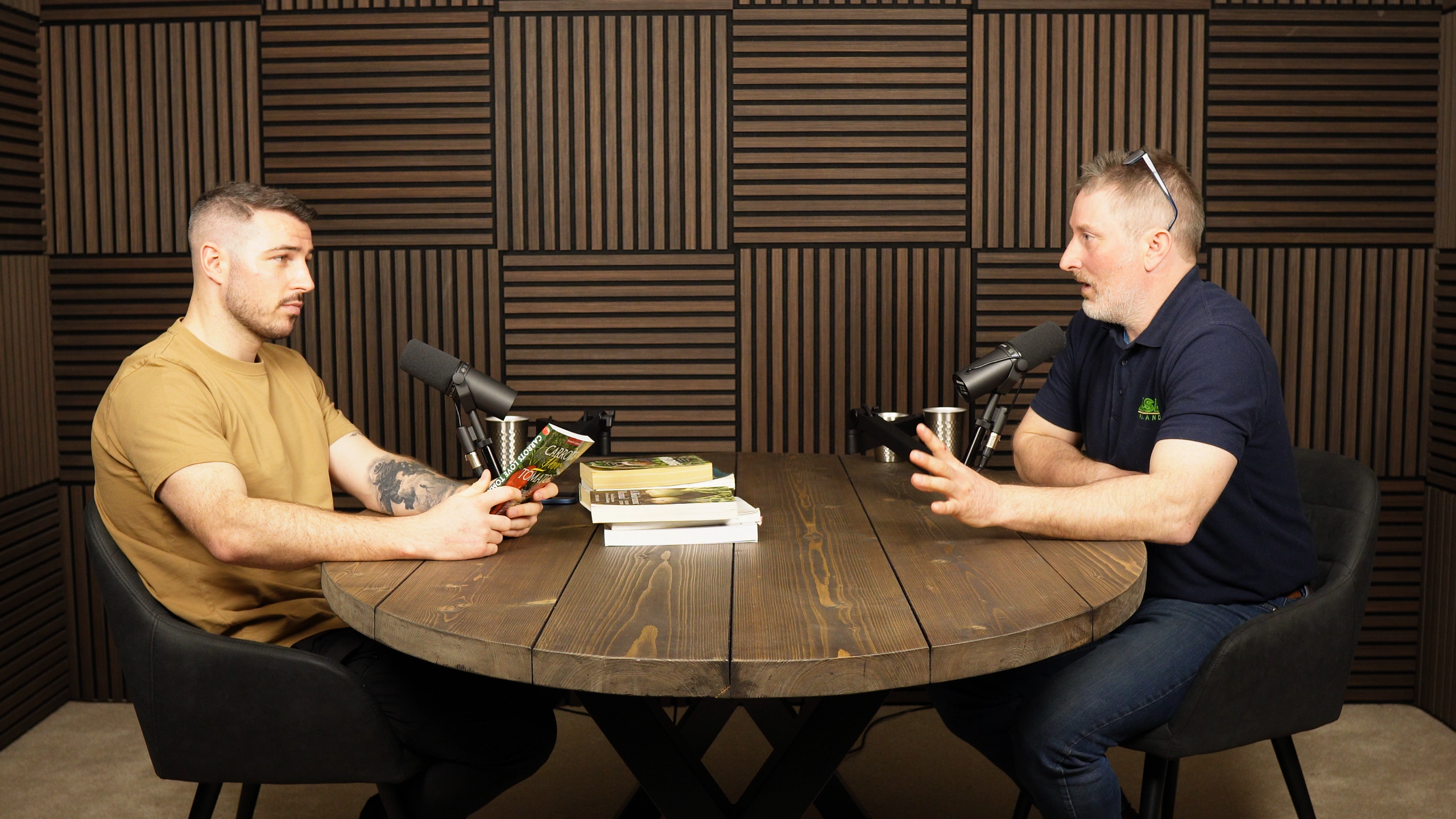
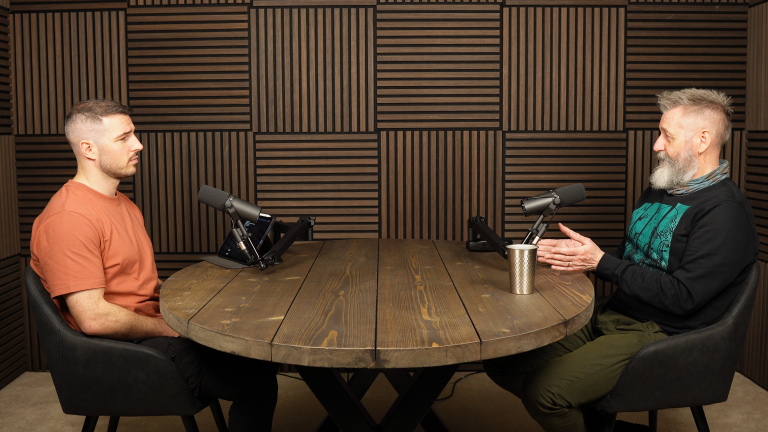
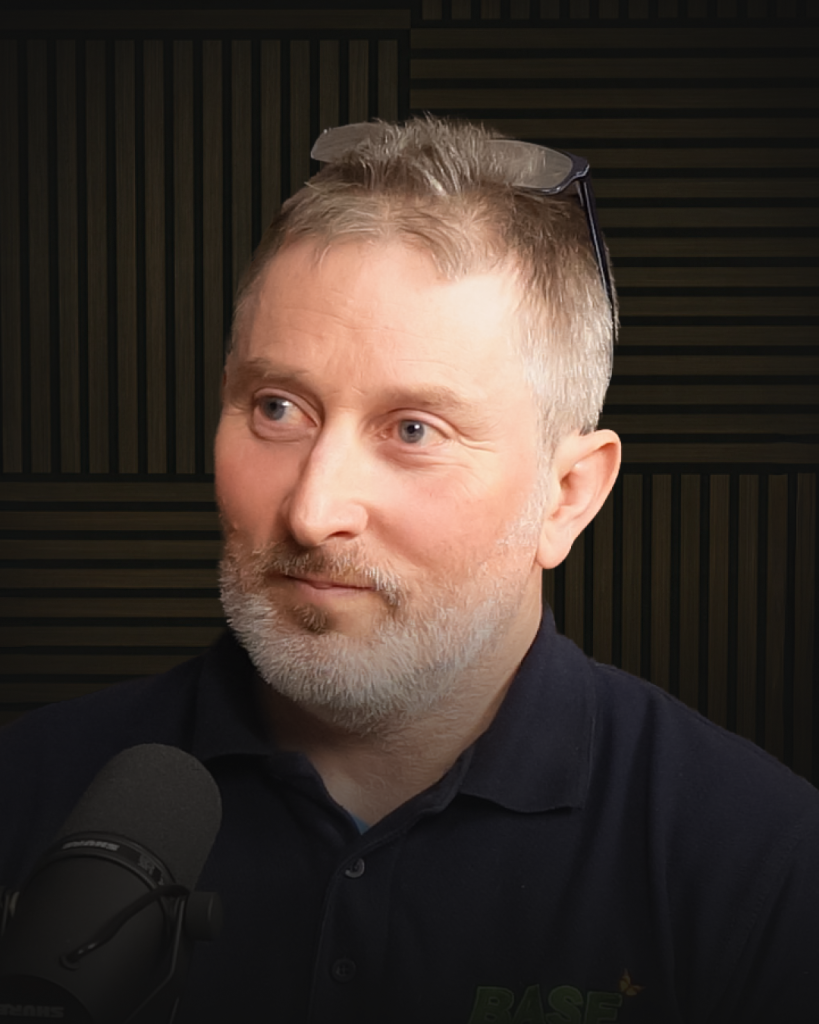
Paul Moorhead is on The Infinite Creators Podcast this week, and I left our conversation thinking about food differently than I did when I sat down.
Paul is an eighth generation farmer in County Meath, a crop grower, and one of the more thoughtful voices in Ireland’s shift towards working with nature instead of against it. He grows oats, barley, rye, beans, peas, and linseed. He’s involved at European level through the Irish Organic Association. He has a first class honours degree in chemistry on top of agri engineering, and he worked in research before coming back to the farm. He’s part of BASE Ireland, the farmer-led network around biology, agriculture, soil, and environment, and he’s done multiple courses with the National Organic Training Skill Net.
What I wanted to understand was simple. Paul farmed conventionally for most of his career. A few years ago he stopped. I wanted to know why, what changed, and what it actually looks like on the ground now.
“Take a little for you. But you’ve got to leave enough for everything else.”
Paul Moorehead
That was the line that stayed with me when we stopped recording. Paul wasn’t talking about a farming policy when he said it. He was talking about how to be on the planet. He just happens to live the answer for a living.
Farming is the intersection of capitalism and the environment
This was the line Paul opened with that I keep coming back to.
He framed his job as standing in the place where two systems meet. One side wants more output, lower prices, year on year. The other side is the actual land, which has its own weather, its own cycles, and which does not care what the market is paying for grain this season. The farmer is the one absorbing that pressure in their own body, in their own bank account, and in the decisions they make about what to put on the soil.
When the weather went against him in 2016 after a bumper 2015, he scratched his head and realised half the inputs he’d been buying weren’t actually moving the result. Something bigger was at work. That was the start of him pulling back.
The year the yield halved
Paul says 2015 felt like he’d arrived. He thought he’d cracked it. The farm was flying.
In 2016, on a near identical diary of inputs, his yield came in at half. Same approach, same fields, very different result. He couldn’t blame himself. The weather was the difference. So he started winding things back, slowly, over five or six years, watching what happened when he spent less. Yield dropped a little. Costs dropped a lot. In the right year, he was now ahead.
That window is what eventually pushed him into giving up his last chemical, glyphosate, three years ago. He’d leaned on it heavily because it made his job easier. Less diesel, less time, easier scheduling. He doesn’t pretend it didn’t have its uses for him. He just stopped wanting to rely on it.
Microbes are my livestock
This was the line that reframed everything for me.
Paul doesn’t keep cattle or sheep anymore. He’s a tillage farmer. So when most people would say his livestock count is zero, he says it’s enormous. The microbes in his soil are his stock, and his job is to feed them.
He feeds them by chopping his straw back into the ground instead of selling it, by keeping living roots in the soil for as much of the year as possible, and by spraying things he’s fermented himself, like a lactobacillus base he tops up through the year with whatever the crop needs at that stage. When microbes live and die in his soil, that’s nitrogen his plants can use, slowly, on biological terms. Versus chemical fertiliser, which he described as a salt that the soil biology is trying to get away from the same way your hand pulls back from a cut dipped in salt.
I had never thought about a bag of fertiliser that way.
A field of one crop is a field shouting one signal
Paul plants several crops in the same field. Peas, beans, oats, barley, rye, with a low understory of clover, grass, herbs, and the odd sunflower. He calls it intercropping. Each plant has a different root system, releases different sugars, and signals to a different set of microbes underground. Plant one crop and the soil hears one voice. Plant five and the soil hears a conversation.
He told me about a year when his crop of beans was direct drilled into a cover that was still flowering. Phacelia in blue, mustards in yellow, radishes in white, beans coming up through it all. His partner came home from work every evening and walked down to that field for the rest of the season. The post in that one field was huge. The yield, despite the chaos, was actually decent. That was the moment he stopped trusting the neat rectangle of single-crop monoculture as the obvious right answer.
Weeds are signals, not enemies
Paul mentioned a book called When Weeds Talk, and the idea behind it has stayed with me. A weed is a plant that grows because the soil needs something it can give. If you knew how to read the weed, you would know what was missing from the ground underneath it.
He told me about a field full of thistles he harvested last year. The thistles came into the shed with the barley. When the customer fed it to their animals, the first thing the animals went for in the trough was the thistle heads. Whatever the thistle had pulled out of the soil, the animals wanted it. The plant we’d written off as a problem was the most nutritious thing in there.
Telling a weed its job is done
The strangest story he told me was about a biodynamic preparation.
Years ago he visited a friend’s farm where a heavy weed had been all over a crop two weeks before. By the time he came back, it was gone. Not killed. Not sprayed in the conventional sense. Just stopped. The farmer had picked a small amount of the weed itself, first thing in the morning, on a specific day in the biodynamic calendar, simmered it down, and sprayed the result back over the field.
Paul tried it on his own farm. His own weed kept what it had already set, but the upper growth stopped. He tried it again the following year on the wrong day in the lunar calendar and got nothing. He’s now convinced you have to do it on the right day, on the right phase of the moon, on the right plant signal, and he’s mapping out the windows for next year. He told me he doesn’t fully understand it yet. He also told me it works.
The moon, the tides, and a body that’s mostly water
Paul leans on a few writers who shaped how he thinks about this. He uses the biodynamic calendar where he can, and his reasoning is the simplest version I’ve heard. Plants are mostly water. We are mostly water. The moon moves the tides. Why would it not be moving us as well, in some smaller way, all the time. He doesn’t claim more than that. He just doesn’t see why we’d assume the opposite.
Mother Earth, casually, from a man in a tractor
I told Paul early on about an experience I’d had years ago where I felt I’d met what I understood to be Gaia, and how it changed the way I look at the land. I half expected him to nod politely and move on.
He didn’t. He said he’d always seen Earth that way. As a being. As alive. As something with a rhythm of breathing in and breathing out, where you feed her in autumn when she’s quieting down and you let her give in spring when she’s opening back up. He frames most of his decisions through that. He’s not preaching it. It’s just how he thinks.
Farmers educating farmers
Paul is part of BASE Ireland. About 130 farmers, all sorts of farming, all trying to do better. There’s a WhatsApp group that’s so active he’s openly grateful for it. There are zooms, meetings, an event in June. He says he’s met some of the closest friends of his life through it, and that the change he’s made on his own farm would not have been possible without the people in that group answering questions for him at every step.
He kept coming back to that. Farmers educating farmers. Not consultants. Not chemical reps. Other farmers, looking at the same problems from slightly different angles, sharing what worked and what didn’t.
You are what you eat, slow grown, close to home
The line he brought us back to, and the one I’ve been thinking about since, is decades old in the slow food movement. You are what you eat. He grows food the slow way now, and he sees the rest of it, the convenience, the rush, the lengthening shelf life, as a stage we’re going through that we will eventually need to come out of.
He said something I want to keep. Community is what makes the world go round. Buy from someone who cared about what they grew. Know the face. Shorten the distance.
That’s the whole thing.
GUEST
Paul Moorhead
DATE
- May 4, 2026
SHARE
Subscribe to Life & Depth for weekly conversations on the deeper side of life.

Paul Moorhead
Resources Mentioned
Worth a look
A few places to keep exploring once the conversation ends.
- BASE Ireland – Farmer-Led Soil & Regenerative Network Learn about Ireland’s farmer-led network focused on soil biology, regenerative agriculture, and knowledge sharing.
- Irish Organic Association – Organic Farming in Ireland Explore organic certification, sustainable farming practices, and ecological agriculture in Ireland.
- Wilding by Isabella Tree – Restoring Nature on Farmland Discover the rewilding journey of the Knepp Estate and its impact on biodiversity and land restoration.
RELATED BLOGS