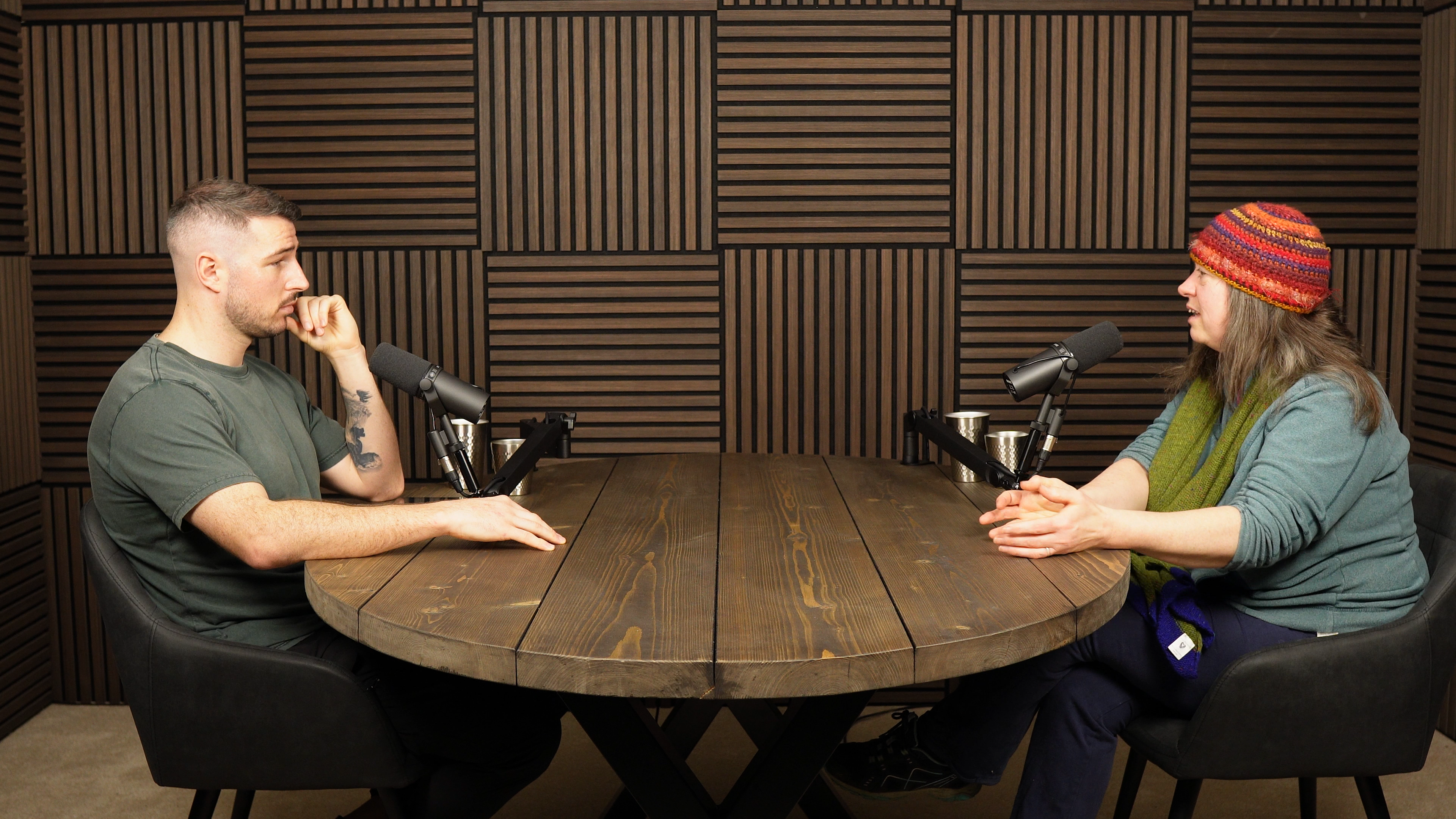
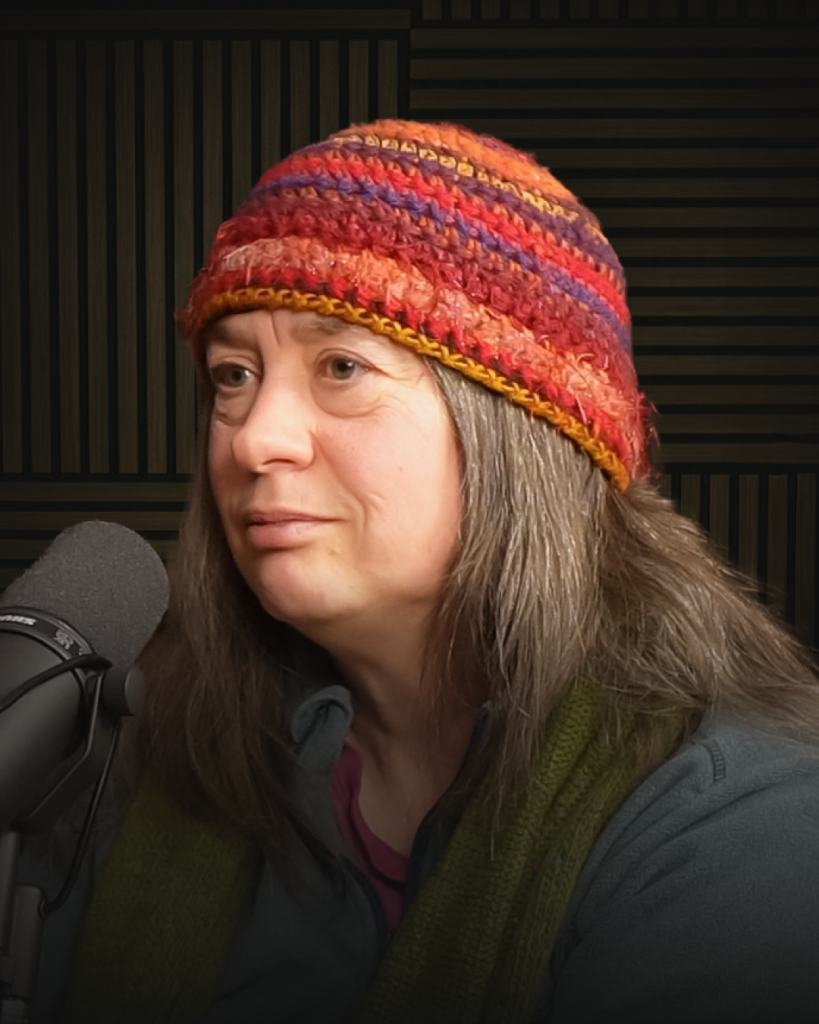
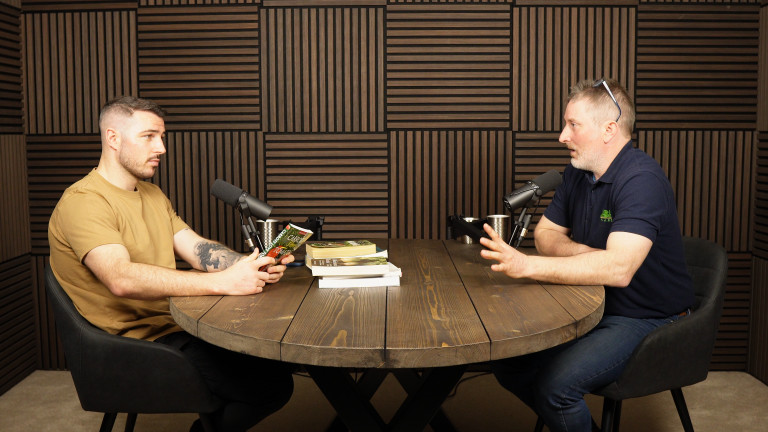
In this episode of Life & Depth, I sat down with forager, herbalist, and soil advocate Claire Thompson for a conversation that felt both grounded and quietly expansive, rooted in the idea that much of what we need is already around us, if we learn how to see it.
Claire’s work focuses on rebuilding relationships between people, plants, and living soil. Through wild food, herbal medicine, and regenerative practices, she offers a perspective that challenges how modern society understands nature, health, and everyday life.
Seeing What Is Already There
A big part of the conversation centred on perception.
Many people walk past plants like nettles and dandelions and see weeds, while Claire sees nutrition, medicine, and function. This contrast reflects a deeper disconnection from the landscape and the knowledge that once allowed people to recognise and use what was available to them.
A key theme throughout the episode is the idea that there is no such thing as a weed. Plants commonly dismissed or removed are often highly beneficial, both nutritionally and ecologically.
Plants as Living Systems
The discussion expands into a broader way of understanding nature.
Rather than viewing plants as objects, they are approached as living systems that can be observed, learned from, and built a relationship with over time.
This kind of learning does not come from quick information, but from attention, experience, and familiarity with the environment.
Reciprocity and Relationship
Another important idea explored in the episode is reciprocity.
Instead of treating nature as something to extract from, Claire emphasises the importance of giving back and recognising that humans are part of a wider ecological system.
This shift in mindset supports more sustainable living and a stronger connection to place.
Modern Disconnection
The conversation also touches on how modern culture has contributed to disconnection.
A preference for neat, controlled environments, along with the gradual loss of traditional knowledge, has shaped how people interact with nature.
As a result, natural systems are often managed or removed rather than understood.
A Personal Path Into Herbalism
Claire’s own journey into this work began through personal health challenges.
This led her to explore the role of diet and nutrition, eventually developing into formal study and a deeper engagement with herbal medicine and foraging practices.
That combination of lived experience and education now informs her approach.
A Whole-System Approach to Health
From there, the episode moves into practical applications of herbalism.
Rather than focusing on isolated symptoms, this approach looks at the body as a whole, taking into account lifestyle, environment, and balance.
Plants are used to support overall wellbeing rather than provide immediate or singular solutions.
Soil as the Foundation
Soil health is presented as a foundational element in this system.
The biological condition of soil directly affects the quality and nutrient content of food, which in turn influences human and animal health.
Through regenerative practices such as composting and restoring soil biology, it becomes possible to rebuild these systems over time.
Rethinking Food Systems
This leads into a broader discussion around food systems.
Modern agriculture often prioritises efficiency and output, sometimes at the cost of soil quality and nutritional value.
Reintroducing natural processes and biodiversity is positioned as a way to improve both environmental outcomes and human health.
The Role of Biodiversity
Biodiversity itself is highlighted as a critical factor.
Everyday choices, including how land is used or maintained, can influence the resilience of ecosystems.
Allowing space for wild growth, even on a small scale, is presented as a simple but meaningful step toward restoring balance.
Learning Through Experience
Education is another thread running through the conversation.
Practical knowledge about health, nature, and the body is often underrepresented, while more abstract subjects take priority.
In contrast, experiential learning, based on observation and interaction, plays a key role in developing understanding.
Everything Is Connected
What stood out throughout the episode is how interconnected these ideas are.
Health, food, soil, and environment are not separate topics, but parts of the same system. Changing one element inevitably affects the others.
Final Reflection
What stayed with me after this conversation is how simple the core message is.
Reconnection does not require anything new, it requires attention to what is already present. The knowledge is not entirely lost, but it does need to be rediscovered.
This is a conversation about awareness, relationship, and perspective.
It invites a different way of seeing the natural world, not as something separate, but as something that continues to shape everyday life in ways that are often overlooked.