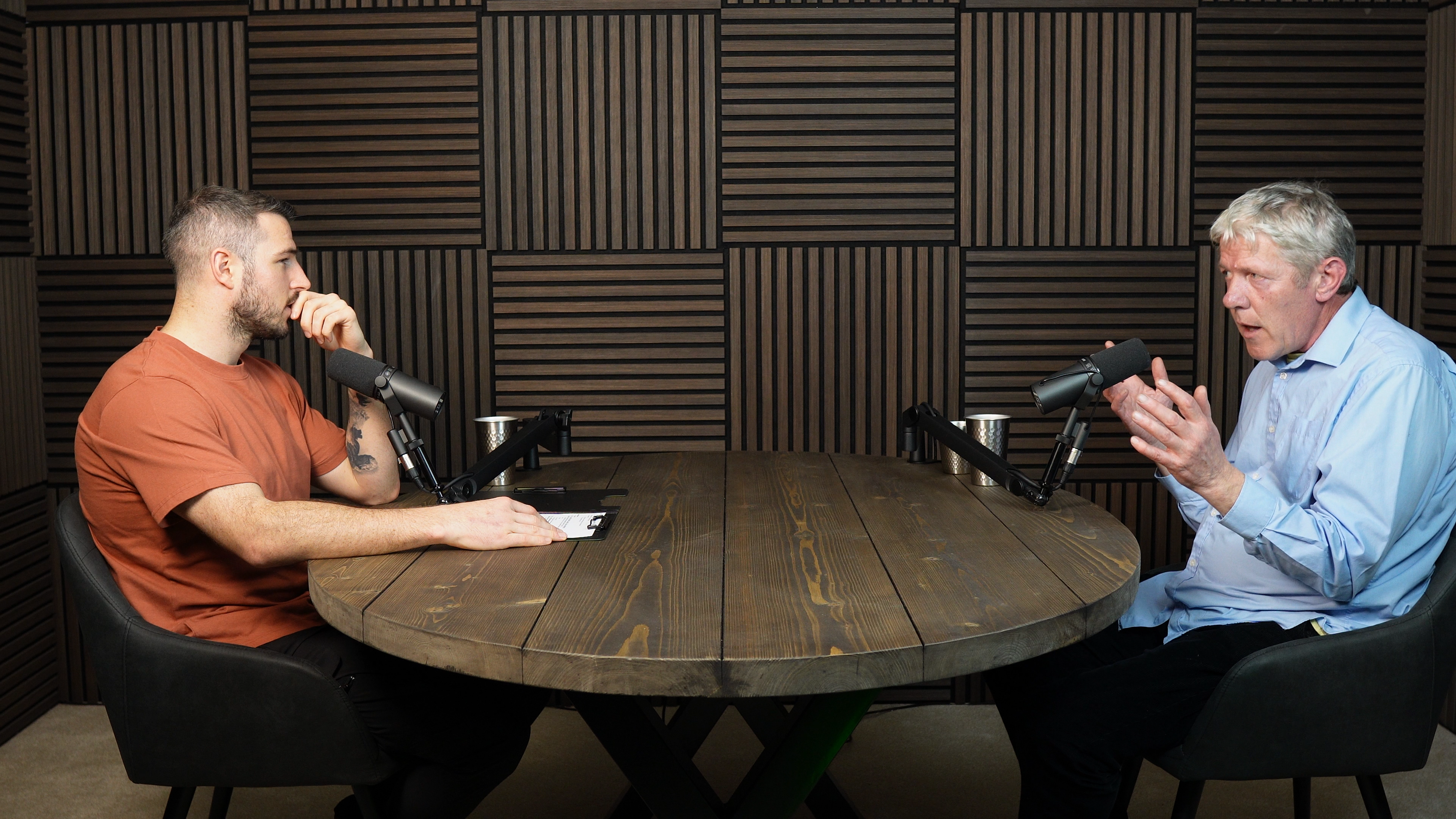
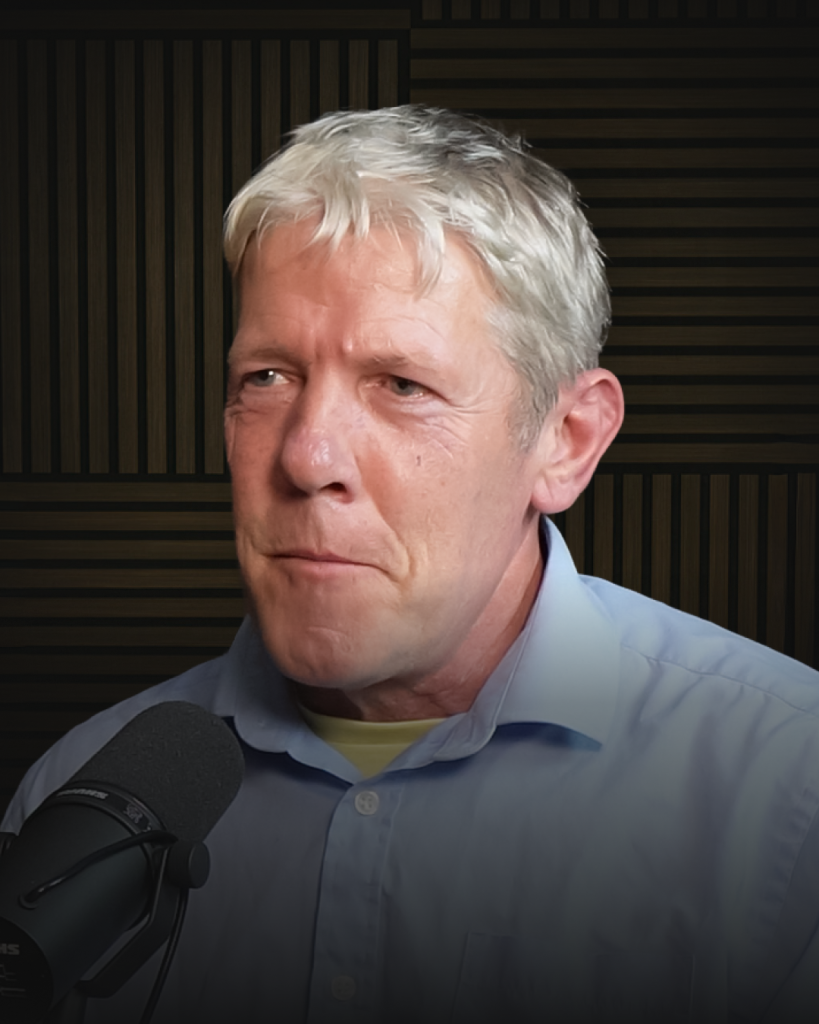
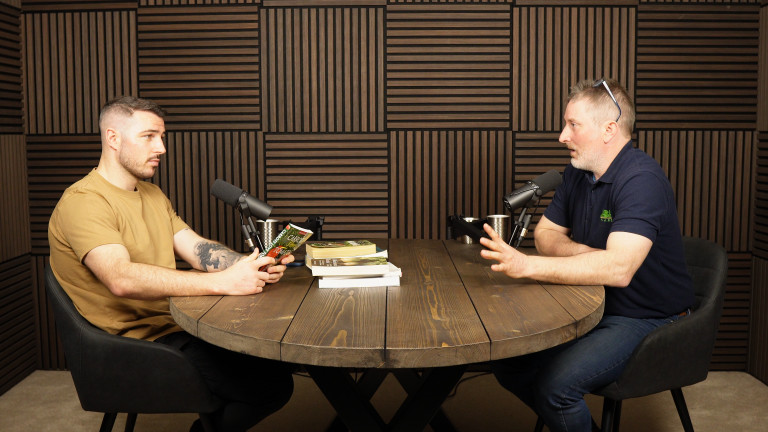
In this episode of Life & Depth, I sat down with Lorcan Ó Tuathail for a conversation that felt expansive, searching, and deeply rooted in place.
Lorcan has spent years at the intersection of land, wildlife, myth, archaeology, and older ways of seeing. He helped spearhead the reintroduction of golden eagles to Ireland in Glenveagh National Park in 2001 after the species had gone extinct here in the 1920s, and he has become deeply interested in the ways language, story, and landscape shape how people understand themselves.
Connection to Land
A big part of this conversation was about the land itself, and what it means to be connected to it.
Lorcan made the point that many people today can live at a distance from the land, especially in modern urban life, but that does not mean they are separate from it. We still depend on it for food, water, and life itself.
He reflected on how older farming life in Donegal was once more mixed, diverse, and rooted in local knowledge, before systems became more specialised and some of that practical wisdom was lost. What stood out was his sense that our disconnect from land is not only cultural. It is also physical, emotional, and even spiritual.
We Are Nature
One small but powerful example he shared was about children growing up without enough direct contact with soil, nature, and the living world around them.
His wider point was simple: we are nature, yet many of us now live as though we are outside it. That split has consequences.
The more we sanitise life, flatten it, and forget where our food and water come from, the easier it becomes to lose something essential in ourselves.
The Return of the Golden Eagles
We also spoke about golden eagles, and this was one of the strongest threads in the episode.
Lorcan shared how the project came together after years of experience working with birds in Scotland, and how bringing golden eagles back to Glenveagh was not simply about restoring one species.
It was also about restoring attention. In his view, the return of the eagles helped draw people’s eyes back to the mountains and to the need to protect those landscapes rather than assuming they will somehow look after themselves.
He also reflected on how apex species can shift an ecosystem in ways people do not always anticipate, but more importantly, how their return changes perception.
Seeing the Landscape Differently
One of the most striking parts of the conversation was Lorcan’s view of Glenveagh and the wider Donegal landscape.
What many people now see as rugged, beautiful, and wild, he sees as incomplete. He pointed out that Glenveagh was once a temperate rainforest, covered in trees, and that the nakedness of much of the landscape today is not an eternal natural state.
That shifts perspective. Instead of seeing absence as normal, it invites the question of what used to be there, what was lost, and what might still be possible.
Language as a Way of Seeing
Another major theme in the episode was language.
Lorcan spoke with conviction about the Irish language not simply as a communication tool, but as a way of perceiving the world. When a language weakens, something deeper is also at risk: a people’s way of seeing the land, naming it, and relating to it.
Place names matter. Old words matter. Language holds traces of how ancestors understood time, water, breath, spirit, and the wider living world.
Questioning What We Think We Know
He also challenged inherited assumptions about the age and origins of Irish.
Lorcan suggested that the language may go back much further than the standard story often told, and that many narratives about Ireland’s past were shaped by more recent agendas.
He was clear that some of what he shared was speculative, but his deeper point was about humility. We may know less than we think, and there may be more depth in Ireland’s past than the simplified version many were taught.
Memory, History, and Recovery
This led into a wider conversation about forgotten memory and suppressed history.
Lorcan spoke about how native and indigenous cultures across the world may have more in common than we realise, especially in how they relate to land, story, and life itself.
His focus was not nostalgia, but recovery. Not returning to the past, but building a more honest relationship with what has been lost, distorted, or dismissed.
Oneness and the Living System
One of the deeper philosophical threads in the episode was oneness.
Lorcan spoke about the idea that all life is connected, and that older peoples may have understood this in a more embodied way.
Water, food, breath, seasons, tides, the moon, the body, the land — in his view these are not separate topics but parts of one living system.
His message was a reminder that no matter what stories culture tells us, we are still part of the same living whole.
Rethinking the Past
We also touched on round towers, ancient settlements, and the stories attached to them.
Lorcan questioned familiar explanations that are often repeated as settled fact and suggested that many archaeological narratives are less certain than people assume.
His approach is simple: revisit accepted stories with fresh eyes and be willing to say “I don’t know.” That openness felt central to how he sees both ecology and history.
Final Reflection
What stayed with me after this conversation is that Lorcan is asking a deeper question than simply what happened in Ireland’s past.
He is asking how a people lose connection, and how they might find it again. Connection to land. Connection to language. Connection to memory. Connection to the living world.
Even if someone does not agree with every conclusion, the conversation opens something important. It invites reflection, curiosity, and a different way of seeing.
This is a conversation about wildlife, memory, belonging, truth, and the stories that shape how we live.
If you are interested in Donegal, Irish identity, the natural world, or the deeper layers of land and language, this episode will give you a lot to sit with.